Safe online casino australia 2026: what the word “safe” actually covers, and where it stops
 Available in US
The phrase “safe online casino australia 2026” is doing a lot of work. In a single search it has to settle three very different questions: whether the casino is licensed at all, whether it treats player money and data responsibly, and whether an Australian can legally use it. None of those three is settled by the badge at the bottom of the homepage. What follows is a reader’s read of what each of those questions actually turns on, drawn from the public record — formal warnings, blocking notices, payment-system rules — rather than from the marketing claims those same sites make about themselves.

Currency and register stamp: current as of 23 September 2026, checked against the Australian Communications and Media Authority’s (ACMA) formal warning register and blocking round publications, the National Self-Exclusion Register (BetStop), and the Australian Transaction Reports and Analysis Centre (AUSTRAC) threshold-transaction guidance.
Table of Contents
- The legal position most readers are looking for first
- What the ACMA has actually been doing in 2026
- The marketing word “safe” and what it actually refers to
- How to read a casino’s responsible-gambling page
- What offshore marketing actually looks like, and where it gets its traction
- The financial picture behind the search
- The wellbei layer: what support looks like for someone who has been playing at an offshore site
- Operator ACMA actions
- Where the calculation lives, and what it actually says
- The other side of the deal: what the licensed market actually offers
- The counsell layer: what the helpline does, and what it does not
- A short, practical order to read this page in
- Where the assessment layer sits
- The prohibitions layer: what the regulator says, plainly
- The enforcement layer, in plain language
- The landscape picture
- The shortlist layer: what the reader can actually use
- How to read a site’s “responsible gambling” page in this context
- The counselling layer, in plain language
- The very last thing to say
- Frequently asked questions
The legal position most readers are looking for first
Online casino is prohibited in Australia. The Interactive Gambling Act 2001 (the IGA), tightened by the Interactive Gambling Amendment Act 2017, makes it an offence to provide online casino games, online pokies or in-play betting to a person physically in Australia. No state or territory licenses those products. What is licensed is wagering on races and sport placed before the event, lotteries and keno — and in practice the bulk of those online wagering licences are issued by the Northern Territory, even when the brand looks like a Sydney or Melbourne operation.

That detail matters because it explains a sentence readers will meet over and over in operator copy: “licensed and regulated”. The licence is real. It is a Northern Territory Racing and Wagering Commission (NTRWC) licence, but it covers wagering, not online casino games. The Northern Territory commission has been described in parliamentary reporting as a small body with no full-time staff, meeting roughly monthly in Darwin, and regulating 52 of Australia’s online bookmakers including the household names. The licence is also the reason those licensed bookmakers refuse to take bets on the third set of a tennis match, refuse to deal a hand of blackjack, refuse to spin a virtual reel of pokies. Those refusals are not gaps in the product. They are the licence’s boundary.
So when an offshore site tells an Australian reader it is “fully licensed”, what it usually means is that it holds a Curaçao or Anjouan licence issued to a company in another country. That licence is not enforceable here. It binds the operator to its own regulator, not to the Australian one. The Australian Competition and Consumer Commission’s consumer guarantees do not reach it. The Australian Financial Complaints Authority does not take complaints about it. If a withdrawal is refused, a bonus is voided, or an account is closed and the balance confiscated, the reader’s practical recourse is whatever the site’s own terms say, applied by the site’s own staff.
What the ACMA has actually been doing in 2026
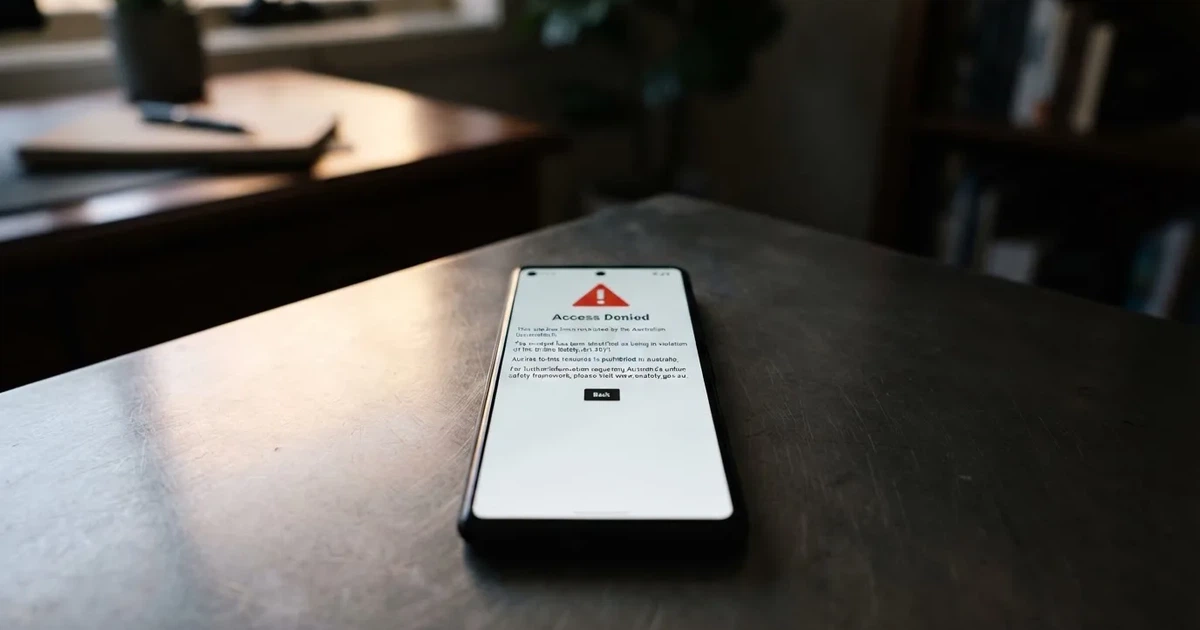
The Australian Communications and Media Authority is the body that enforces the prohibition on the supply side. It does not prosecute individual players — the IGA targets the provider, not the punter — but it does the things that shrink the offshore supply: it investigates, issues formal warnings, and asks Australian internet service providers to block the offending sites. The cumulative figures are striking. As reported in June 2026, the ACMA had asked Australian ISPs to block 1,751 illegal gambling and affiliate marketing websites since the first blocking request in November 2019, and more than 230 unlicensed services had left the Australian market since enforcement was strengthened in 2017. The June 2026 round alone added 12 more domains to the block list, including 7Signs, ChromaBet, Donbet, Duospin, Freshbet, Slots Gem, Jacks Club, Lucky Start, Pointsbetz, Spinrise, Vinyl Casino and Wildsino.
Formal warnings are a separate, slower-moving lever. They are public, dated and named — the ACMA publishes each one with the operator entity on the receiving end. Over the last few years the formal-warning register has filled up with Curaçao-registered holding companies that run multiple brands out of one office. Dama N.V., for instance, received a warning in May 2022 covering six of its brands — Bambet, Dazard, Level Up, Rocketplay, Wild Tornado and Cobra Casinos — and then fresh warnings over Woo Casino in March 2025 and Spirit Casino in May 2025. In July 2025, Consolutetish S.R.L. was warned over National Casino and Bizzo Casino, the latter already warned once before in 2022 under a different parent. Bamboo Media was warned over Ignition Casino in the same round. Earlier that year, EOD Code SRL was warned over Instant Casino in February 2025, and Sterplay Holding Ltd over Casino Intense in April 2025. Most recently, Ryker B.V. was warned over Jackbit and CasinOK in April 2026, and Pulsup Ltd over Rocketplay in March 2026. Hollycorn N.V. sits on the same register for Sky Crown and Blue Leo, going back to September 2022.
The pattern matters more than any single warning. The same parent company reappears under different brand names; warnings dated two or three years apart catch the same holding group; some of the brand shells are barely a year old when they receive their first warning. That is the operational shape of “licensed” when the licence is offshore and the regulator is thousands of kilometres away.
What a formal warning actually changes
A formal warning is not a fine and it is not a block. It is a published statement, addressed to a named legal entity, that the ACMA has reasonable grounds for believing the recipient has been offering prohibited interactive gambling services to customers in Australia. The warning itself does not take the site offline. What tends to follow is one of three outcomes: the operator quietly withdraws from the Australian market, the operator re-emerges under a new domain while keeping the same back office, or the operator ignores the warning and waits for the ACMA to escalate to a formal block request to the ISPs. The block is what actually stops an Australian from reaching the site through the usual channels, and the block takes time to put in place after the warning. During that gap, the site keeps accepting Australian deposits.
That gap is the one to remember. An ACMA formal warning is the regulator saying, on the public record, that it has looked at this site and found it offering prohibited services. The site’s response is to behave accordingly; some do, most do not. The reader who only looks for the warning will be misled by its existence into thinking the site is closed, when in practice the site is still live, still taking deposits and still subject to the same risks that prompted the warning in the first place.
How the block list actually bites
Once the ACMA asks ISPs to block a domain, the major Australian ISPs comply. That stops the average reader from typing the URL into a browser and reaching the site the normal way. It does not stop the determined reader, who can use a virtual private network, a mirror domain, or a site the ACMA has not yet blocked. It also does not put any money already on the blocked site back in the reader’s account. A balance sitting in a casino account when the site gets blocked is, for practical purposes, gone. Offshore dispute resolution is what it is, and the operator is under no obligation to refund Australian customers once it has stopped accepting them. A small number of operators do refund outstanding balances after a block; most do not, because there is no Australian body with the power to make them.
The marketing word “safe” and what it actually refers to
“Safe” in casino marketing usually means one or more of three things: the site holds a licence somewhere, the site protects deposits and personal data with standard encryption, and the site offers responsible-gambling tools. Each of those can be true of an offshore site without making it safe for an Australian reader in the way the search query intends. A Curaçao licence is real but unenforceable in Australia; transport-layer encryption is table stakes for any website handling payments; and responsible-gambling tools on a site the ACMA has warned for offering prohibited services in Australia are operating outside the framework those tools were designed to fit.
The reader-facing meaning of “safe online casino australia 2026” is closer to this: licensed and accountable in Australia, using payment methods an Australian bank will process for gambling, subject to a self-exclusion register that actually binds the operator, and accessible through Australian ISPs without a block in front of it. The first condition — an Australian licence for online casino games — is unmet by definition, because no such licence exists. The others can only attach to wagering, not casino.
That is the consequence the search query does not state. The reader is asking for a thing the Australian regulatory system does not provide, and the marketing word “safe” is being used to soften the gap between what the reader wants and what is on offer. The honest answer is not that all offshore casinos are equally dangerous. It is that the safety features the reader is looking for are features of the Australian licensing regime, and that regime does not cover online casino games.
How to read a casino’s responsible-gambling page
The Australian-licensed wagering operators carry a familiar cluster of responsible-gambling tools, and they are the tools the reader’s “safe” instinct is really pointing at. Deposit limits, time-out periods, self-exclusion, activity statements, and access to the National Gambling Helpline (1800 858 858) — these are the things that make a wagering account safer to use, regardless of whether the reader ever needs them. They sit on top of an enforceable licence, an Australian complaints body, and an account that an Australian bank will process.
BetStop, the National Self-Exclusion Register, has been live since August 2023 and binds every Australian-licensed online and phone wagering service. A punter who registers with BetStop is excluded from every participating licensee at once; the operator cannot override it; the exclusion periods run from a minimum of three months up to a lifetime. This is the single most powerful player-protection tool available here, and it is the test an offshore site cannot pass: an offshore casino is not connected to BetStop, because BetStop only reaches operators that hold an Australian licence. A self-exclusion button on an offshore site is, at best, an internal policy the site can choose to honour and, at worst, a checkbox on a marketing page.
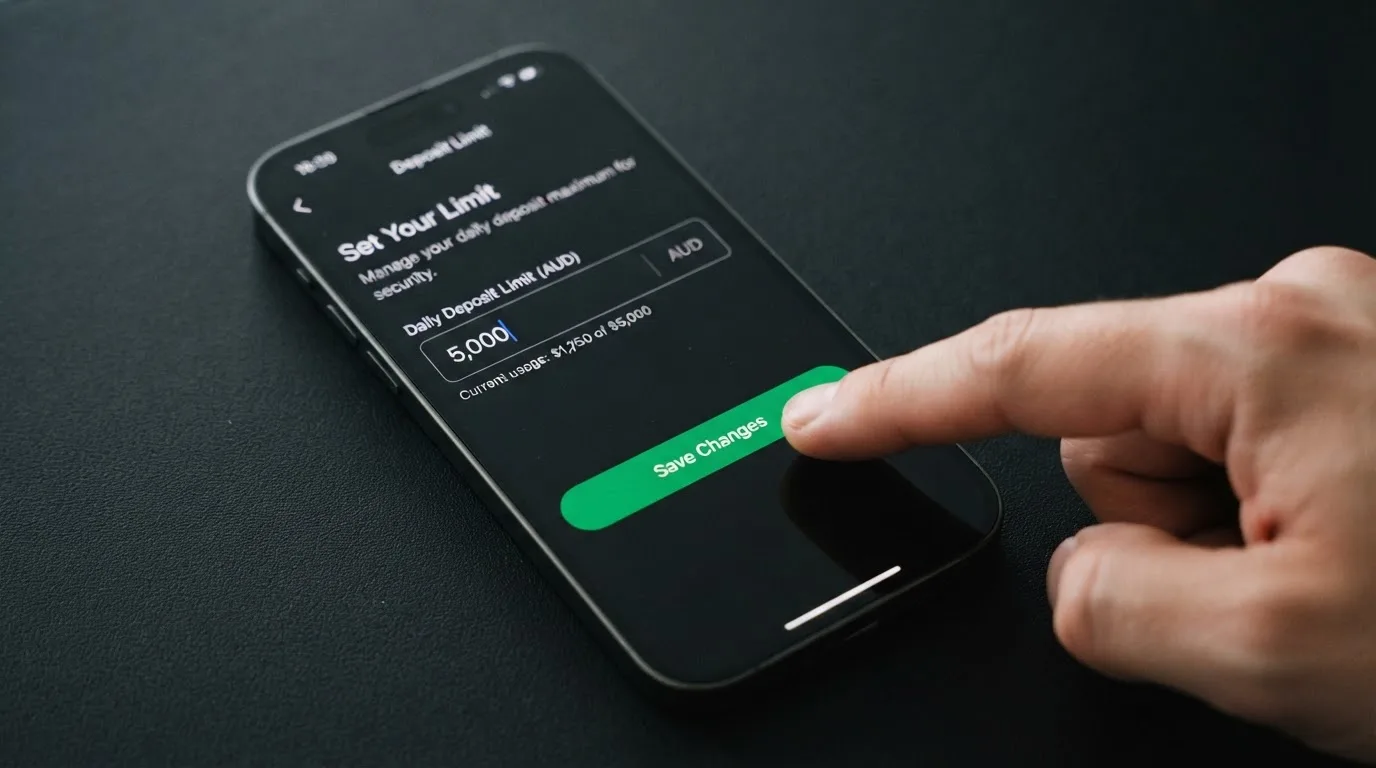
The deposit-limit screen on a regulated wagering account sits inside the licence conditions. The operator must honour it; the bank processing the deposit cannot override it; the regulator can audit it. The deposit-limit screen on an offshore site is a UI control on a website the ACMA has been telling Australians not to use. It will or will not be enforced according to the site’s own policies, and there is no Australian body to complain to if it is not.
Where the bank steps in
Australian banks have been building their own layer on top of the regulator’s framework. Westpac’s gambling block works at card level: the bank refuses authorisation of any transaction carrying the merchant category code “Betting/Casino Gambling” on eligible personal credit and debit cards. The block is set by the customer and applies to the card, not to the merchant, which is why it is a useful complement to whatever the casino’s own deposit limits look like. Commonwealth Bank offers a similar lock through its app, with the same caveat the bank states in its own terms: it blocks most gambling transactions, but cannot guarantee all gambling-related purchases will be stopped. ANZ’s block, once activated, applies to gambling transactions made through a digital wallet such as Apple Pay on the eligible card, not only to the physical card; turning the block back off requires a 48-hour cooling-off period, and ANZ warns explicitly that some non-gambling transactions might be blocked in error.
These are real protections, and they cost the reader nothing. The block sits between the bank and the merchant, so it works even on an offshore site that would otherwise be willing to take the deposit. That is the practical upside of an Australian-issued card: the bank can refuse a transaction on grounds the offshore operator cannot override. The downside is the same: an Australian bank cannot enforce an Australian gambling-block on a non-Australian card. A reader who travels, who holds a foreign card, or who pays through a wallet funded from a non-Australian account loses that layer entirely.
What the payments rules do
Under the Interactive Gambling Act 2001 as amended in 2023, Australian-licensed online wagering services cannot accept payment by credit card or other credit-related products, and the same prohibition constrains linked digital wallets. The rule took effect on 11 June 2024, with penalties of up to A$247,500 for operators that breach it. The rule is also the reason an Australian-licensed wagering site will only offer debit card, bank transfer, PayID/Osko or BPAY. Crypto is also outside the licensed deposit menu.
That menu is the second clue the reader can use. A site that asks for a credit card or a crypto deposit from an Australian reader is, by definition, operating outside the Australian rule set. It may still be the site the reader wants to use; it is not, by that single signal, the site the reader asked for. A site that offers only the four permitted payment types, that sits on the BetStop register, that publishes an Australian-issued licence and that processes through an Australian bank is offering the wagering product the regulatory system was built for.
The wagering product is the ceiling on what an Australian-licensed site can do, and it is also the floor of what an Australian reader’s “safe” instinct is reaching for. Anything above that ceiling is offshore, by construction.
What offshore marketing actually looks like, and where it gets its traction
The offshore casino market targets Australian readers through two channels that the licensed market does not use as aggressively: large matched-deposit bonuses, and cryptocurrency deposits. Both work around the Australian rules, and both are the things the reader is most likely to have seen in the ads that prompted the search. The bonuses are usually structured as a percentage match on the first deposit, with a wagering requirement — typically expressed as a multiple of the bonus, the deposit, or both — that has to be met before any winnings can be withdrawn. The terms are written into the site’s own terms of service, and they are enforced by the site’s own staff. There is no Australian regulator the reader can appeal to if the interpretation goes against them.
The site itself tends to advertise a licence at the bottom of the page, usually a Curaçao or Anjouan gaming licence, and to display responsible-gambling tools — deposit limits, time-outs, links to a counselling organisation — that look like the tools the reader would see on an Australian-licensed site. The two sets of tools have the same icons but a different enforcement regime behind them. On the Australian-licensed site, the tools sit inside a regulatory framework the operator cannot opt out of. On the offshore site, the tools sit on a webpage the operator can change at any time.
Where the licence picture is most misleading
Curaçao has, since 2023, operated a more structured licensing regime than it did before, with separate licence holders and operators and a regulator that can act. The licences still exist; the holders are still mostly holding companies registered in Curaçao for tax and structuring reasons; the underlying operators are still mostly run from offices in other jurisdictions. None of that is illegal in itself. The thing that does not exist is an enforceable connection between an offshore licence and an Australian reader’s right to complain. A complaint to the Curaçao Gaming Control Board, on a withdrawal refused by an offshore casino that took an Australian deposit, is a complaint made in another jurisdiction, in another language, with another procedural code, and on a timeline measured in months rather than days. It is not impossible; it is also not the answer the reader came for.
The financial picture behind the search
H2 Gambling Capital’s 2025 estimate puts annual Australian losses to illegal gambling sites at about A$3.9 billion, and reports that the share of gambling going through legal channels fell from 74% in 2021 to 64% in the same period. Those figures describe a market where a meaningful minority of Australian gambling spend is leaving the licensed system, and the licensed system is the only one with the safeguards the reader’s “safe” search is reaching for. The figures are estimates, not audited numbers — H2 is a forecasting house, not a regulator — but the direction of travel is consistent with everything the ACMA has been publishing: more blocking rounds, more formal warnings, more operator entities that hold multiple brands and recycle through them as each one is added to the block list.
The reader-facing interpretation is straightforward. The Australian market has both a regulated and an unregulated tier, and the gap between them is widening. The reader who searches for “safe online casino australia 2026” is, in most cases, looking for the regulated tier — and discovering, on inspection, that the regulated tier does not include the casino product they wanted to play.
The wellbei layer: what support looks like for someone who has been playing at an offshore site
For someone who has been playing at an offshore casino and has decided to stop, the practical sequence is short. The first step is to withdraw any balance still in the account, recognising that the offshore operator may refuse, delay, or attach bonus-abuse terms to it. The second is to ask the issuing bank whether a gambling block can be added to the card used for the deposits; Westpac, Commonwealth Bank and ANZ all offer this. The third is to register with BetStop, the National Self-Exclusion Register, which binds every Australian-licensed online and phone wagering service at once, including the licensed bookmakers the reader may not yet have used; an offshore site is not connected to BetStop, but the licensed ones are, and a BetStop registration closes them off without having to manage each one separately. The fourth is to contact the National Gambling Helpline on 1800 858 858, free and 24/7, with chat available at Gambling Help Online; the counsellors on the line are used to calls from people in exactly this situation, and they can talk through the financial, banking and counselling supports available in the reader’s state or territory.
None of those steps undoes deposits already made, and none of them forces an offshore operator to refund a balance. They do, between them, close the door the reader came in through and put a financial lock between the reader’s bank and the same kind of merchant in future. That is the practical outcome of taking the “safe” instinct at its word: not a guarantee of recovery, but a tightening of the perimeter around the next decision.
What BetStop will and will not do
BetStop is the single most effective player-protection tool available in Australia, but its scope is the Australian licensed market, not the offshore market. Registering with BetStop blocks the punter from opening new accounts, depositing into existing accounts, and receiving marketing from every participating Australian-licensed online and phone wagering service for the chosen exclusion period. It does not block an offshore site from accepting a deposit, because the offshore site has not agreed to be bound by BetStop and the ACMA’s blocking regime operates on the supply side, not the payment side. The BetStop registration does, however, mean that the bank-level gambling block the reader adds on top of it is doing the work for the offshore layer. The two together — BetStop closing off the licensed side, the bank block closing off the card — are the strongest perimeter the reader can put in place without giving up access to the bank account.
Operator ACMA actions
| brand | ACMA action and date | operator named by the ACMA | subject support |
|---|---|---|---|
| RocketPlay | March 2026; May 2022 | Pulsup Ltd; Dama N.V. | listings-only |
| Level Up Casino | May 2022 | Dama N.V. | listings-only |
| Woo Casino | March 2025 | Dama N.V. | no-data |
| Spirit Casino | May 2025 | Dama N.V. | no-data |
| National Casino | July 2025 | Consolutetish S.R.L. | listings-only |
| Bizzo Casino | July 2025; 2022 | Consolutetish S.R.L.; TechSolutions | listings-only |
| Ignition Casino | July 2025 | Bamboo Media | no-data |
| Instant Casino | February 2025 | EOD Code SRL | listings-only |
| Jackbit | April 2026 | Ryker B.V. | no-data |
| Casino Intense | April 2025 | Sterplay Holding Ltd | listings-only |
| Sky Crown | September 2022 | Hollycorn N.V. | no-data |
The eleven brands in this section each appear because the ACMA has issued a formal warning over them, on a named date, to a named operator entity. The list is not a recommendation and not a ranking. It is a snapshot of the public warning register, ordered as the research file orders them, and it is here because a reader who has met any of these names in marketing material is entitled to see, in plain English, what the regulator has said about them.
RocketPlay
RocketPlay carries a March 2026 formal warning issued to Pulsup Ltd over Rocketplay, and an earlier May 2022 warning to Dama N.V. covering six of its brands including Rocketplay. The brand sits inside a holding-group pattern: the same operator entity has appeared across multiple brands over a four-year span, with fresh warnings each time the regulator’s attention returns. The casino offers the standard offshore product menu — slots, live dealer, sports — and a Curaçao-registered corporate parent. The Australian reader’s position on this brand is the position the warning register describes: the ACMA has looked at this site, found it offering prohibited services to Australians, and put that finding on the public record.
Level Up Casino
Level Up Casino carries a May 2022 formal warning issued to Dama N.V. as part of the same six-brand group as RocketPlay. The brand has been a quieter presence in the Australian market since, and the warning is correspondingly older, but it remains on the register and the underlying operator entity has continued to attract fresh action under other names. The site is still reachable through mirror domains and through the link structures affiliate pages use to bypass ISP blocks.
Woo Casino
Woo Casino was the subject of a fresh formal warning to Dama N.V. in March 2025, returning to the same holding group that received the original 2022 action. The brand is one of the more aggressively marketed Dama brands in Australia, and the March 2025 warning is the regulator’s response. As with the other Dama brands, the site’s reach into Australia depends on affiliate networks rather than direct search advertising.
Spirit Casino
Spirit Casino was named alongside Woo Casino in the ACMA’s May 2025 warning to Dama N.V. The two warnings, two months apart, suggest the operator group continued offering prohibited services to Australian readers between them and that the ACMA returned to the matter with each new domain.
National Casino
National Casino carries a July 2025 formal warning issued to Consolutetish S.R.L., part of the same round that named Bizzo Casino and Ignition Casino. The brand is one of the more established names in the offshore-affiliate channel aimed at Australian readers. The warning is fresh; the brand has not yet been added to the ACMA’s block list as of mid-2026.
Bizzo Casino
Bizzo Casino was named in the ACMA’s July 2025 formal warning to Consolutetish S.R.L., and also in a 2022 warning to TechSolutions (CY) Group Limited and TechSolutions Group N.V. Two warnings to two different parents, four years apart, describe a holding-group pattern of the kind the ACMA’s register is most useful for surfacing: the same brand, the same product, the same offer to Australian readers, but a different corporate envelope each time the regulator looks.
Ignition Casino
Ignition Casino carries a July 2025 formal warning issued to Bamboo Media. The brand is a long-running name in the offshore market, and the warning sits alongside the National Casino and Bizzo Casino warnings in the same ACMA round. As with the others, the warning is a public statement that the regulator has found prohibited services on offer; the site’s continued reach depends on affiliate channels and mirror domains rather than on direct Australian search traffic.
Instant Casino
Instant Casino carries a February 2025 formal warning to EOD Code SRL, on the earlier end of the 2025 warning cycle. The brand has been marketed aggressively through Australian-facing affiliate pages, particularly through crypto-deposit angles that bypass the bank-level protections an Australian card would otherwise offer.
Jackbit
Jackbit was named, with CasinOK, in the ACMA’s April 2026 formal warning to Ryker B.V. The two brands share an operator entity and a similar product focus on crypto deposits and sports-adjacent casino offerings. The April 2026 warning is the most recent on this list and has not yet been added to the block list as of mid-2026.
Casino Intense
Casino Intense carries an April 2025 formal warning to Sterplay Holding Ltd. The brand is a smaller name in the offshore market, but the public warning puts it on the same footing as the larger brands for the Australian reader: a site the regulator has named as offering prohibited services.
Sky Crown
Sky Crown carries a September 2022 formal warning to Hollycorn N.V., alongside the related Blue Leo brand. The warning is the oldest on the list, but Hollycorn has continued to operate multiple brands in parallel, and the underlying operator entity is the same one the ACMA returns to in each round of warnings.
What the list adds up to
Read end to end, the eleven brands describe a market, not a set of isolated incidents. The same holding groups reappear across multiple warnings; the same pattern of brand shells, fresh domains and affiliate-driven acquisition runs through every name on the list. The reader who meets any one of them in an ad is meeting a representative of the category, not an outlier. The ACMA’s warning register is the public record of that category’s behaviour over the last four years, and the trend is toward more warnings, not fewer.
Where the calculation lives, and what it actually says
The arithmetic that belongs to this page is a blocking-rate calculation. The two inputs are the cumulative number of sites the ACMA has asked ISPs to block since enforcement began — 1,751 as of June 2026 — and the date of the first blocking request, November 2019. The interval is roughly six and a half years. Dividing one by the other gives an average blocking rate of around 270 sites per year, or roughly five per week. That is the rate at which the offshore supply has been added to the block list over the period the ACMA has been publishing its blocking totals.
The figure is an average, and the rate is not steady. Some years ran faster than the average; some slower. The June 2026 round alone added 12 domains, and the ACMA has run similar-sized rounds in earlier years. The point of the calculation is the order of magnitude, not the precise weekly figure: the ACMA is blocking sites at a rate that means the offshore market for Australian readers is being pruned continuously rather than occasionally, and the list a search engine returns today is not the list it will return in three months’ time. A reader’s “safe” instinct, applied to a specific offshore brand, has to hold up against the probability that brand will be on the block list within the next twelve months.
That probability is not uniform across brands. A long-established brand with a Curaçao licence and a stable operator entity is more likely to survive the next round intact; a fresh brand on a fresh domain, run by a holding group with a string of recent warnings, is more likely to find itself on the next block list. The eleven brands in the section above are the ones the ACMA has already moved against. Each one is one formal warning closer to a block.
The other side of the deal: what the licensed market actually offers
The licensed Australian market is not a consolation prize. It is a different product. The wagering operators licensed under the IGA — the sports and racing bookmakers — offer pre-event betting on races and sport, lotteries and keno. They do not offer online casino games, online pokies, or in-play betting. Those refusals are not gaps. They are the boundary the regulator has drawn. The licensed bookmaker’s product is narrower than the offshore casino’s product, and the licensed bookmaker’s product carries the protections the offshore casino does not: BetStop, the bank-level gambling blocks, AUSTRAC reporting, an Australian complaints body, and a licence the regulator can revoke.
For a reader whose interest is racing or sport, the licensed market is the only market worth using, and the protections sit underneath the product rather than beside it. For a reader whose interest is online casino games, the licensed market has nothing to offer, by construction, and the offshore market is the only market that does. That gap is the structural reason the offshore market exists, and the structural reason the search for “safe online casino australia 2026” keeps returning offshore brands. The reader’s safety instinct is correct; the licensed market it points at does not contain the product the reader wants.
The counsell layer: what the helpline does, and what it does not
The National Gambling Helpline is 1800 858 858, free, 24/7. Chat is available at Gambling Help Online. The counsellors are based in each state and territory, and they take calls from people whose gambling has moved from recreational to concerning, from concerning to harmful, or from harmful to something the caller wants to stop. They also take calls from people who are still deciding what their gambling is. There is no threshold for calling, and the call is not recorded in any way that affects the caller’s bank account, gambling accounts, or employment.
The helpline does not refund losses, recover balances from offshore sites, or close accounts on the caller’s behalf. It does the thing it is designed to do: connect the caller with a counsellor who can talk through the financial, family, and legal supports available in the caller’s jurisdiction, including the bank-level gambling blocks and BetStop registration. For readers who have already been playing at an offshore site and want to stop, the helpline is the place to start, because the call is anonymous, the advice is free, and the counsellors have heard the situation before.
A short, practical order to read this page in
For a reader who has not yet deposited at an offshore casino, the safest sequence is to register with BetStop, set a deposit limit on every Australian card that could plausibly fund a gambling account, and use only Australian-licensed wagering operators for racing, sport, lotteries and keno. The deposit limits and the BetStop registration do the work even if the reader never uses the wagering product; they sit there as a guardrail for the day an impulse arrives.
For a reader who has already deposited at an offshore casino and wants to stop, the sequence is the other way around. Withdraw any balance that can still be withdrawn, knowing the operator may refuse. Add a gambling block to the card used for the deposits. Register with BetStop, which closes off the licensed side. Call the National Gambling Helpline on 1800 858 858 to talk through the financial and counselling supports available. Do not assume the balance will come back; do assume the next deposit is the one to stop.
For a reader who is comparing offshore brands and trying to decide which is least bad, the comparison is between a set of options none of which is licensed in Australia, all of which have been the subject of at least one ACMA formal warning, and any one of which can be added to the ACMA’s block list in the next blocking round. The comparison is between things the reader cannot rely on. The page’s own conclusion, with the arithmetic above it, is that the comparison is the wrong shape: the licensed market does not offer online casino games, and the offshore market does not offer the protections the reader came for.
Where the assessment layer sits
The section above names eleven brands, every one of which has been the subject of an ACMA formal warning. The reader who arrived at this page having searched for “safe online casino australia 2026” is, in most cases, looking at one or more of these names in their own browser tabs. The honest reading of those tabs, set against the warning register and the blocking-rate figure, is that the offshore market the reader is comparing is a market in active regulatory retreat. The brands on the warning register are not the brands the regulator has decided are safe; they are the brands the regulator has decided to act against. The reader who treats the warning register as a starting point rather than an afterthought will end the comparison faster than the reader who treats it as a footnote.

The practical upshot is not that every offshore brand is identical. Some are longer-established, some have stronger responsible-gambling tooling, some have a cleaner payout record in their own published terms. None of those differences change the underlying fact: the operator is offering a product Australia does not license, to readers Australia does not protect, under a licence Australia does not enforce. The reader’s safety instinct is pointing at the Australian licence, not at the Curaçao one, and the Australian licence is not on offer.
The prohibitions layer: what the regulator says, plainly
The Interactive Gambling Act 2001 is the statute that makes the offshore offer to Australian readers unlawful on the supply side. The ACMA’s role is to enforce it. The regulator’s formal warnings are public; the block list is public; the holding-group patterns that surface across the warning register are public. The reader who wants to know what the regulator thinks of any specific offshore brand can look it up on the ACMA’s website, by operator name or by brand, and see the warning, the date, and the relevant section of the IGA.
The reader who wants to know whether any specific offshore brand is licensed for online casino games in Australia has a shorter answer: no offshore brand is, because no online casino licence for Australian residents exists. The reader who wants to know whether the offshore brand’s own licence is real also has a short answer: usually, yes, in the jurisdiction that issued it. The reader who wants to know whether that licence protects an Australian reader against a refused withdrawal or a voided bonus has the shortest answer: no.
The enforcement layer, in plain language
The ACMA’s enforcement is layered, and each layer takes longer than the one before it. A formal warning is the fastest: a public letter to a named operator entity, published on the ACMA’s website. A block is slower: the ACMA asks the major Australian ISPs to block the domain, the ISPs comply, and the block takes effect across Australian residential and mobile networks within days. A civil penalty proceeding is slowest: the ACMA can seek penalties in the Federal Court against operators that ignore both warnings and blocks, with fines of up to A$1.71 million per day for individuals and A$8.55 million per day for corporations for ongoing breaches of the IGA’s core prohibitions. Those figures are not theoretical; they have been applied to operators that have continued to offer prohibited services after warnings and blocks.
For the individual reader, the most useful layer is the bank layer. The bank’s gambling block works at the point of sale, before the deposit reaches the casino. It is faster than the ACMA’s warning, faster than the ACMA’s block, and it does not depend on the regulator’s view of any specific brand. It depends only on the bank recognising the merchant category code and the customer’s setting. The reader who wants the fastest possible protection adds the bank-level block before doing anything else.
The landscape picture
The full landscape of an Australian reader’s online gambling decision has three layers, stacked. At the bottom is the licensed wagering market: Australian-licensed bookmakers offering pre-event racing and sport betting, lotteries and keno, with Australian-issued licences, BetStop coverage, bank-level gambling blocks, and Australian consumer protection. Above that is the offshore casino market: Curaçao- and Anjouan-licensed operators offering online casino games, online pokies and in-play betting to Australian readers, with no Australian licence, no BetStop coverage, no Australian consumer protection, and an ACMA formal warning register that has been growing since 2022. At the top is the search result the reader sees: a mix of licensed and offshore brands, with the offshore brands outbidding the licensed ones for attention through bonuses, crypto deposits, and affiliate marketing that the licensed market does not use.

The “safe” instinct the reader brought to the search is real, and it is pointing at the right thing. The thing it is pointing at is the bottom layer. The product the reader wants, in most cases, is in the middle layer. That is the shape of the choice, and no amount of marketing language softens it.
The shortlist layer: what the reader can actually use
For a reader whose interest is racing, sport, lotteries or keno, the Australian-licensed wagering market is the only market that fits the search. The licensed bookmakers accept deposits through debit card, bank transfer, PayID/Osko and BPAY; refuse credit cards and crypto; publish deposit-limit screens in their apps; bind themselves to BetStop; and process complaints through an Australian body. The product is narrower than the offshore casino product, and that is the point: the product is the licence’s boundary, and the boundary is what makes the protections enforceable.

For a reader whose interest is online casino games, the licensed market has nothing to offer, and the offshore market has everything the licensed market refuses to provide — and nothing the licensed market provides. The reader who decides to use an offshore casino is, in effect, choosing to give up the protections the search query was reaching for. The reader’s “safe online casino australia 2026” search returns the names of operators the regulator has warned, the names of operators the regulator has blocked, and the names of operators the regulator is about to warn or block. None of those is the answer the search was looking for.
How to read a site’s “responsible gambling” page in this context
The responsible-gambling page on an offshore casino looks like the responsible-gambling page on an Australian-licensed wagering operator. The two pages have the same headings: deposit limits, time-outs, self-exclusion, links to counselling organisations. The difference is the regime behind the page. On the Australian-licensed operator, the page is a regulatory artefact: the tools it lists are conditions of the licence, audited by the regulator, enforceable against the operator. On the offshore casino, the page is a marketing artefact: the tools it lists are commitments the operator has chosen to make, enforceable only by the operator, revocable by the operator, and not connected to BetStop.
The reader who reads the page and takes it at face value will see the same protections on both sides. The reader who reads the page and asks what happens when the protection fails will see two very different answers. On the licensed side, the answer is a complaint to an Australian body, an investigation, and a possible sanction. On the offshore side, the answer is a complaint to the offshore operator, investigated by the offshore operator, with the offshore regulator as the only external appeal. The licensed side has a referee; the offshore side does not.
The counselling layer, in plain language
The National Gambling Helpline (1800 858 858) is the front door of Australia’s free counselling infrastructure for people concerned about their own or someone else’s gambling. The helpline is staffed by counsellors trained in problem gambling, available 24 hours a day, every day of the year. The chat service at Gambling Help Online runs alongside the phone line and is the same service in a different channel. Both are free, both are confidential, and neither requires the caller to have stopped gambling before calling. The most common callers are people who have not yet decided what they want to do, and the call is the place where the decision gets made.

The helpline can also put the caller in touch with state-based financial counselling services, which help with the practical aftermath of gambling-related debt — talking to creditors, structuring repayment, accessing hardship provisions. Those services are not part of the helpline itself, but the counsellors on the helpline know how to reach them and will warm-transfer the call where appropriate.
The very last thing to say
Online casino games are not licensed in Australia. The Australian licensing regime covers wagering on races and sport, lotteries and keno, and the licensed market carries the protections — BetStop, bank-level gambling blocks, AUSTRAC reporting, an enforceable complaints process — that an Australian reader’s “safe online casino” instinct is pointing at. The offshore market offers the products the licensed market does not, and it does not offer any of the protections the licensed market does. The ACMA’s warning register and block list are the public record of the offshore market’s behaviour over the last four years, and that record shows a market in active regulatory retreat. The reader who treats the search query at its word — safe, online, casino, Australia — ends up at the licensed wagering market, with a narrower product and stronger protections, or at the offshore casino market, with a wider product and weaker protections. The arithmetic is on the side of the narrower product.
Frequently asked questions
What are the clearest signs that an online casino claiming to be “safe” is not actually licensed anywhere reputable?
The clearest signs are the ones the ACMA’s formal warning register is built to surface: a Curaçao or Anjouan licence issued to a holding company, a brand name that has changed parent company in the last few years, and an absence from any Australian-licensed register. A site that lists no licence, or lists a licence from a regulator the reader has never heard of, is in the same category as a site that lists a Curaçao licence; the reader should check the ACMA’s register before depositing.
Is a PayID deposit any safer than a card deposit at an offshore online casino?
PayID is an Australian real-time transfer rail, but the deposit still arrives at an offshore operator that is not regulated in Australia. Paying to a PayID shows the account-holder name before the transfer is sent, which is useful for spotting scams, and Australian Payments Plus warns that being asked to transfer to a PayID on an illegal gambling site almost certainly means a scam site. The protection is the named-account check, not the safety of the recipient.
Is it legal for an Australian to use an offshore online casino even if that site markets itself as “safe”?
The Interactive Gambling Act 2001 targets the provider, not the player. Individual Australians are not prosecuted for using offshore casinos, but they give up Australian consumer protection in doing so. The ACMA has the power to block the site and the operator may refuse withdrawals; the reader has no Australian body to complain to.
What should someone do if they realise they’ve been playing at an offshore casino and want to stop?
Withdraw any balance still on the site, recognising the operator may refuse; add a gambling block to the Australian card used for deposits; register with BetStop, which closes off Australian-licensed wagering sites; and call the National Gambling Helpline on 1800 858 858 for free, confidential advice. The bank block and the BetStop registration are the two most effective single steps.
How does a genuinely regulated gambling operator’s safety record differ from an offshore casino’s own marketing claims?
A regulated Australian operator is bound by licence conditions, by BetStop, by AUSTRAC reporting and by an Australian complaints process; an offshore casino is bound by its own terms and by its own jurisdiction’s regulator. The regulated operator’s record is auditable; the offshore casino’s record is whatever its own published terms say it is. The difference is the regime behind the marketing, not the marketing itself.
What free support services exist in Australia for someone concerned about their own online casino use?
The National Gambling Helpline on 1800 858 858, free and 24/7, with chat at Gambling Help Online, is the front door. BetStop is the National Self-Exclusion Register and binds every Australian-licensed online and phone wagering service. The major Australian banks — Westpac, Commonwealth Bank, ANZ — offer gambling blocks at the card level. State-based financial counselling services, reachable through the helpline, help with the practical aftermath of gambling-related debt.
Published by the Casino Safety Info team.